

Introduction: Who is the ENTP (Debater)?

ENTPs are driven by curiosity, challenge, and the excitement of new ideas. Their minds are fast, flexible, and constantly exploring possibilities, often jumping between concepts, connections, and opportunities that others may not immediately see.
At their core, ENTPs are innovators. They are less interested in maintaining systems and more focused on questioning, disrupting, and improving them. Where others look for stability, ENTPs look for potential — asking “what if?” and pushing boundaries to see how far an idea can go.
They thrive in dynamic environments where thinking is valued over routine and where creativity is rewarded over conformity. Structure, repetition, and rigid systems can feel restrictive, especially when they limit exploration or experimentation.
ENTPs are also highly verbal and expressive thinkers. They often refine their ideas through discussion, debate, and interaction with others. This makes them engaging and persuasive, but also prone to challenging viewpoints simply to test their strength.
Ultimately, ENTPs are not here to preserve how things are —
they are here to challenge assumptions and create what could be.
Core Traits
- Curious and idea-driven
- Fast-thinking and adaptable
- Enjoys debate and exploration
- Dislikes routine and rigidity
Seeks novelty and possibility
Strengths & Weaknesses | ENTP (Debater)
ENTP Strengths
Innovative – ENTPs excel at generating new ideas and exploring unconventional approaches. They naturally question existing systems and look for ways to improve or disrupt them.
Quick-Thinking – Their ability to process information rapidly allows them to respond in real time, making them effective in dynamic, fast-changing environments.
Adaptable – ENTPs are comfortable with change and uncertainty. They can shift direction quickly and adjust their thinking based on new information or opportunities.
Curious – They have a strong desire to explore new topics, industries, and ideas. This keeps them learning continuously and allows them to connect insights across different domains.
Persuasive – ENTPs are skilled communicators who can present ideas in engaging and compelling ways. They often influence others through logic, enthusiasm, and confidence.
Big-Picture Thinking – They focus on possibilities and future potential rather than current limitations, allowing them to identify opportunities others may overlook.
ENTP Weaknesses
Easily Distracted – ENTPs are drawn to new ideas and opportunities, which can make it difficult to stay focused on one path long enough to see it through.
Lack of Follow-Through – They may start multiple projects with enthusiasm but struggle to complete them, especially once the initial excitement fades.
Argumentative – ENTPs enjoy debate and may challenge others’ ideas even when it’s unnecessary, which can create tension in professional environments.
Dislike of Structure – Rigid systems, repetitive tasks, and strict processes can quickly drain their motivation and reduce performance.
Overconfident in Ideas – Their confidence in their thinking can sometimes lead them to underestimate execution challenges or overlook practical limitations.
Workplace Habits | ENTP (Debater)
Workplace Habits
ENTPs approach work as a space for exploration, innovation, and idea generation. They are most engaged when solving new problems, brainstorming possibilities, or working on projects that require creativity and adaptability.
They prefer flexibility over structure and are more motivated by interesting challenges than by routine responsibilities. Environments that allow experimentation and open thinking bring out their best performance.
However, they may struggle in roles that require consistency, repetition, or strict adherence to processes. Without variety and stimulation, their engagement can drop quickly.
ENTPs are energised by interaction and often refine their thinking through discussion. They thrive in environments where ideas are exchanged freely and where questioning is encouraged rather than discouraged.
ENTP Subordinates
As employees, ENTPs are proactive and idea-driven. They contribute best when given the freedom to explore solutions rather than being confined to rigid instructions.
They may resist micromanagement or overly structured workflows, preferring autonomy and flexibility. While they bring strong creative input, they may need support in maintaining consistency and follow-through.
ENTP Colleagues
ENTPs are energetic and engaging team members who bring fresh perspectives to discussions. They often challenge ideas, which can strengthen outcomes when managed well.
However, their tendency to debate and shift focus can sometimes disrupt teams that require stability or clear direction. They work best with colleagues who are open-minded and comfortable with dynamic thinking.
ENTP Managers
As leaders, ENTPs focus on innovation and growth. They encourage new ideas, experimentation, and independent thinking within their teams.
They are less interested in control and more interested in progress, but may need to develop stronger systems and consistency to ensure execution matches their vision.
Best Career Environments | ENTP (Debater)
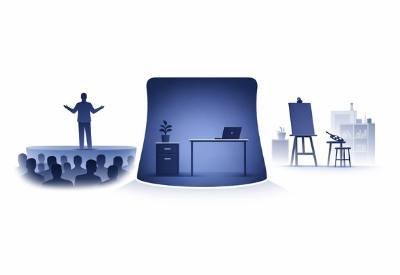
ENTPs thrive in environments that are dynamic, flexible, and idea-driven. They perform best where creativity is valued and where they are free to explore new approaches.
They are particularly suited to workplaces that offer:
- Variety and change
- Opportunities for innovation
- Open discussion and idea exchange
- Minimal unnecessary structure
Highly repetitive or rigid environments can feel restrictive and lead to disengagement. ENTPs need space to think, experiment, and evolve.
Career Paths | ENTP (Debater)
ENTPs thrive in environments that are dynamic, flexible, and idea-driven. They perform best where creativity is valued and where they are free to explore new approaches.
They are particularly suited to workplaces that offer:
- Variety and change
- Opportunities for innovation
- Open discussion and idea exchange
- Minimal unnecessary structure
Highly repetitive or rigid environments can feel restrictive and lead to disengagement. ENTPs need space to think, experiment, and evolve.
What Will Hold You Back | INTP (Logician)

ENTPs often struggle with consistency. Their tendency to chase new ideas can prevent them from fully developing or executing existing ones.
They may also engage in debate or exploration that doesn’t directly contribute to outcomes, leading to wasted time or friction with others.
Additionally, avoiding structure entirely can limit their ability to scale their ideas into real-world results.
Growth Strategy | ENTP (Debater)

Growth for ENTPs comes from balancing creativity with discipline.
They benefit from building simple systems that help them follow through on ideas and complete what they start. Execution, not ideation, is the key to long-term success.
Learning when to stop exploring and start implementing is a critical shift.
If there is one shift that creates the biggest impact, it is this:
👉 Move from starting ideas to finishing them.
Career Decision Shortcut | ENTP (Debater)

When choosing a career, ENTPs should prioritize roles that offer:
- Variety and change
- Opportunities to innovate
- Freedom to think and experiment
- Dynamic, fast-moving environments
A simple test:
“Will this role keep me challenged, engaged, and evolving?”
If yes, it’s likely a strong fit.
Conclusion | ENTP (Debater)
ENTPs are built to challenge, innovate, and explore new possibilities. Their ability to think quickly, adapt, and generate ideas makes them highly valuable in dynamic and evolving environments.
However, their success depends on turning ideas into results. When they combine creativity with execution, they move from potential to impact.
At their best, ENTPs don’t just think differently —
they create what others haven’t yet imagined.